Mini Truck Deep Dive: Choosing the Right
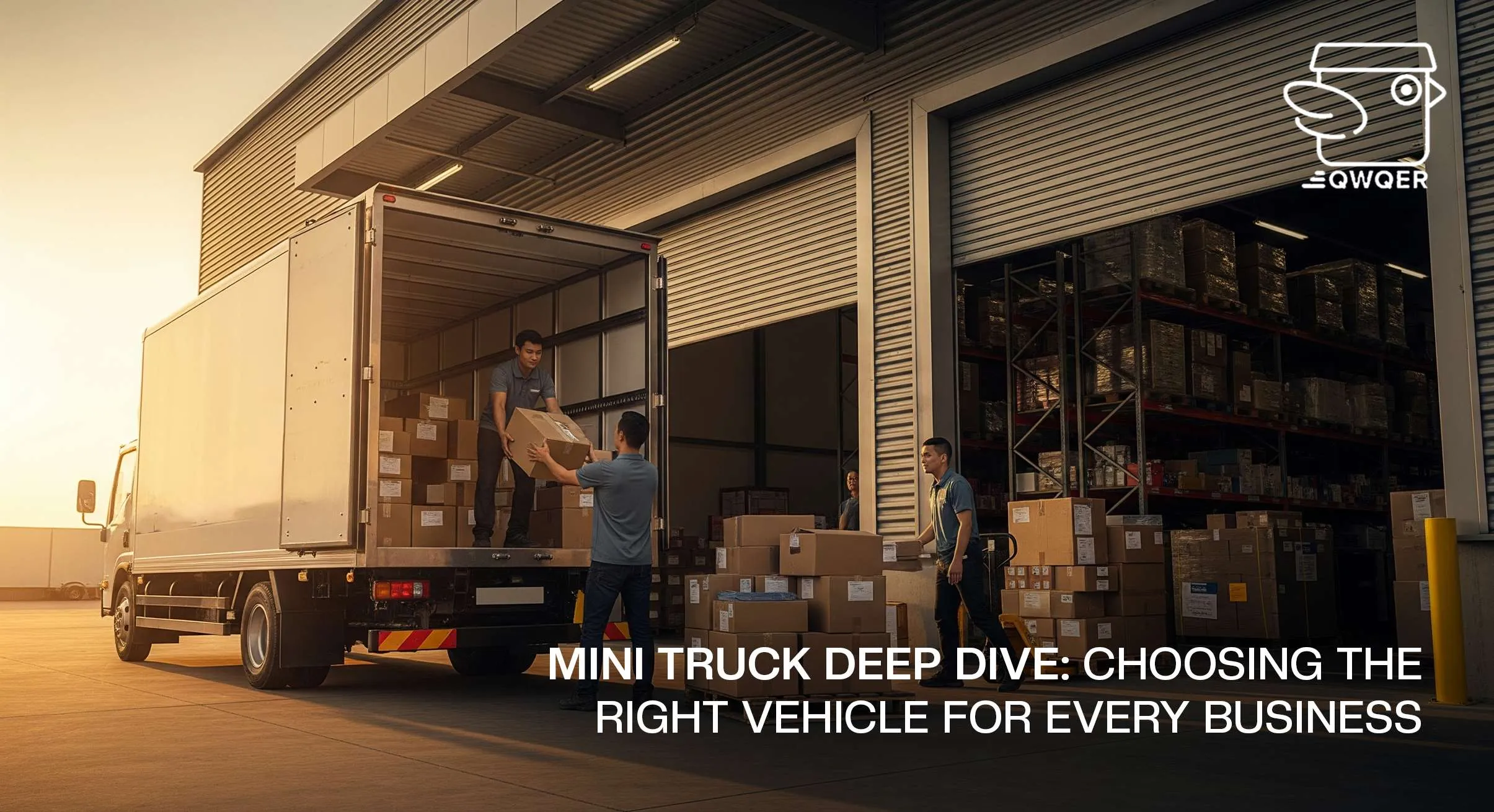
Vehicle for Every Business
Choosing the wrong vehicle for a job costs time, money, and sometimes
damaged goods. This guide helps you pick the best mini-truck for common
tasks — from single-item appliance deliveries to a one-bedroom household
move — so you can book smarter on QWQER and get the job done right the
first time.
If you want to jump straight to booking, QWQER’s mini-truck booking page
has instant quotes and vehicle options.
At-a-glance comparison
Below is a quick reference to help you match common jobs with the right
vehicle. Numbers are typical ranges — always confirm exact specs or limits
when you book.
VehicleTypical payload (kg)Typical cubic capacityBest forTata
Ace~700–1,100 kg (varies by variant)Medium deck — fits medium furniture,
appliancesSmall furniture moves, multiple boxes, small retail stock.Tempo /
Small 4-wheel light commercial~600–900 kg (model dependent)Narrower
deck, good for medium loads in congested routesMedium loads that need a
4-wheel platform but must access narrow city lanes.Load Auto / 3-wheeler
cargo~400–600 kgSmaller cubic capacity — ideal for single
boxesCourier-style deliveries, light retail replenishment, flower/food
delivery.Chota Hathi (local small truck term; larger mini
truck)~1,000–1,500 kgLarger deck — best for heavier single items and small
household movesSingle-room moves, heavier appliances, greater cubic loads.
(Term used locally for higher-capacity mini trucks like some Ace HT variants).
Vehicle breakdown — what each does best
Tata Ace
Overview: The Ace family is one of India’s most common mini-truck choices
for last-mile delivery. It’s compact but offers a substantial payload for its size.
Typical payloads span several variants; many Ace models are used for
intra-city deliveries and small moves.
Best for: Small furniture, multiple boxed retail orders, mattresses,
refrigerators (single), and small commercial stock replenishments.
Loading tips: Place heavier items on the floor close to the axle, strap tall
items against the sidewalls, and use blankets for scratch-sensitive furniture.
Common mistakes: Underestimating cubic volume (stack height matters)
and overloading by dimension rather than weight.
Tempo / Small light commercial (generic)
Overview: “Tempo” in everyday usage can refer to several small LCVs. These
vehicles are useful where a little extra deck area is needed but street access
is tight. Payloads vary across models.
Best for: Consolidated retail runs, deliveries that need a low deck height for
easy loading, or routes with medium distance but congested inner lanes.
Loading tips: Use pallets if moving multiple boxes (even on a small scale)
and strap stacks to avoid shifting.
Load Auto / 3-wheeler cargo
Overview: Three-wheeler cargo vans are the most cost-efficient option for
light loads and very narrow streets. Typical payloads are in the ~400–600 kg
range depending on the model.
Best for: Single-package courier deliveries, small bakery or grocery
replenishment, flower or meal deliveries, and narrow-lane access jobs.
Loading tips: Since floor area is limited, plan stacks carefully and avoid high
centers of gravity. Keep fragile items padded and strapped.
Chota Hathi
Overview: “Chota Hathi” is a commonly used colloquial term in many parts of
India for a slightly larger mini truck than the typical Ace (sometimes used for
certain 1-ton mini-trucks). These vehicles are better when payload or cubic
capacity pushes beyond typical Ace limits.
Best for: Single-bedroom moves, multiple large appliances, heavier
commercial loads that still need intra-city agility.
Loading tips: If you’re booking a Chota Hathi variant, ask about deck
dimensions and whether a ramp or tailboard lift is included.
How to choose — a simple decision framework
Use this 5-step checklist before booking:
1. Measure weight and volume. If an item is heavy but small (like a
motor), weight rules. If light but bulky (pillows, bedding boxes), cubic
volume matters more.
2. Check route constraints. Narrow lanes, low bridges, or multi-floor
pickups (no lift) change the ideal vehicle choice.
3. Define handling needs. Do you need extra hands for loading? A
tailboard? Ramp access? Add manpower if any item is awkward or
heavy.
4. Decide price vs speed. Smaller vehicles are cheaper but may need
more trips. Bigger vehicles are faster for large loads but cost more.
5. Confirm exact vehicle specs. Ask for payload limits and deck
dimensions and compare them to your measured items.
Micro case study — real choices
- Single heavy refrigerator within city: Tata Ace or Chota Hathi
depending on weight & deck dimensions.
- Daily bakery stock to multiple outlets: Load Auto / Ape Xtra for low
cost and quick stops.
- One-bedroom household move: Chota Hathi or larger Ace HT+ (more
deck room + higher payload).
Cost & pricing tips
Factors that influence price:
- Distance (km) and travel time.
- Weight vs volume (some operators charge by whichever metric leads
to higher pricing).
- Manpower (loading/unloading).
- Waiting time and priority delivery (peak slots cost more).
- Special handling (fragile, hazardous, or insured goods). QWQER
provides instant fare estimates and itemised charges on booking so you
see all components before confirming.
How to get the best value
- Match load to the smallest vehicle that safely carries it.
- Combine multiple deliveries into one run (bundle drops) when possible.
- Book off-peak if your schedule allows.
- Ask for an itemised quote (distance, vehicle, manpower, waiting) to
compare apples to apples.
Packing & loading best practices
Quick packing checklist
- Measure length × width × height for biggest items (calculate m³).
- Use moving blankets, bubble wrap or corrugated sheets for fragile
surfaces.
- Straps and ratchet belts to secure tall stacks.
- Wooden pallets for many small boxes (palletize to protect and speed
loading).
- Label fragile/this-side-up clearly.
By cargo type
- Electronics: Double-box smaller units, cushion gaps, and avoid
stacking heavy boxes on top.
- Furniture: Disassemble if possible; pad corners and secure loose parts.
- Textiles & fabrics: Stack in breathable covers; light but bulky — watch
cubic space.
- Liquids: Use sealed, upright containers and pad gaps to prevent
tipping.
Insurance note: For high-value or fragile loads, consider transit insurance or
confirm platform/operator coverage during booking.
Route & city considerations
- Inner-city narrow lanes: Prefer Load Auto or a small Tempo/Ace with
compact turning radius.
- Peak congestion windows: Early morning or late evening runs can
avoid traffic but may require permit checks in some localities.
- Longer inter-city runs: Choose vehicles with better suspensions and
consider securing items for highway speed.
QWQER-specific booking tips & add-ons
On QWQER you can get instant quotes and choose vehicle types at booking.
The platform’s mini-truck and fleet pages list vehicle options and allow
add-ons like extra manpower, priority delivery, and insurance. Use these when
your job demands special handling.
How to estimate quickly for a booking
1. Measure the largest items (L×W×H) and sum volumes.
2. Check the vehicle’s deck dimensions on the QWQER listing.
3. If weight or volume is close to the limit, choose the next higher vehicle
to be safe.
4. Add manpower for heavy items — it’s cheaper than risking damage or
long loading time.
Conclusion
Picking the right mini-truck boils down to three things: measure, match, and
secure. Measure your items (weight + volume), match them to the vehicle’s
specs and route constraints, and secure them properly for transit. Want help
deciding? Get instant quotes and vehicle choices on QWQER’s mini-truck
booking page — book the right vehicle and move with confidence.
What’s the difference between payload and cubic capacity?
Payload = how much weight a vehicle can carry safely (kg). Cubic capacity =
how much physical space you can fit on the deck (m³). Both matter — choose
the vehicle with adequate weight and space.
Which mini-truck is cheapest for inner-city deliveries?
Load Auto/3-wheeler cargo is usually the most cost-efficient for light, local
deliveries because of fuel and operational efficiencies.
Can I book extra helpers for loading/unloading on QWQER?
Yes — manpower add-ons are available on QWQER during booking for heavy
or awkward items.
What items require special handling or insurance?
High-value electronics, antiques, glass items, and delicate machinery should
be insured and may need additional packaging or a specialist handler.
How far in advance should I book for peak season?
Book as early as possible. For major festivals and sale-season peaks, 3–7
days ahead is a safe window to ensure vehicle availability.
Can I change vehicle type after booking?
Policies vary; contact the operator or QWQER support immediately —
changes may affect pricing or availability.