Online Truck Booking vs. Traditional
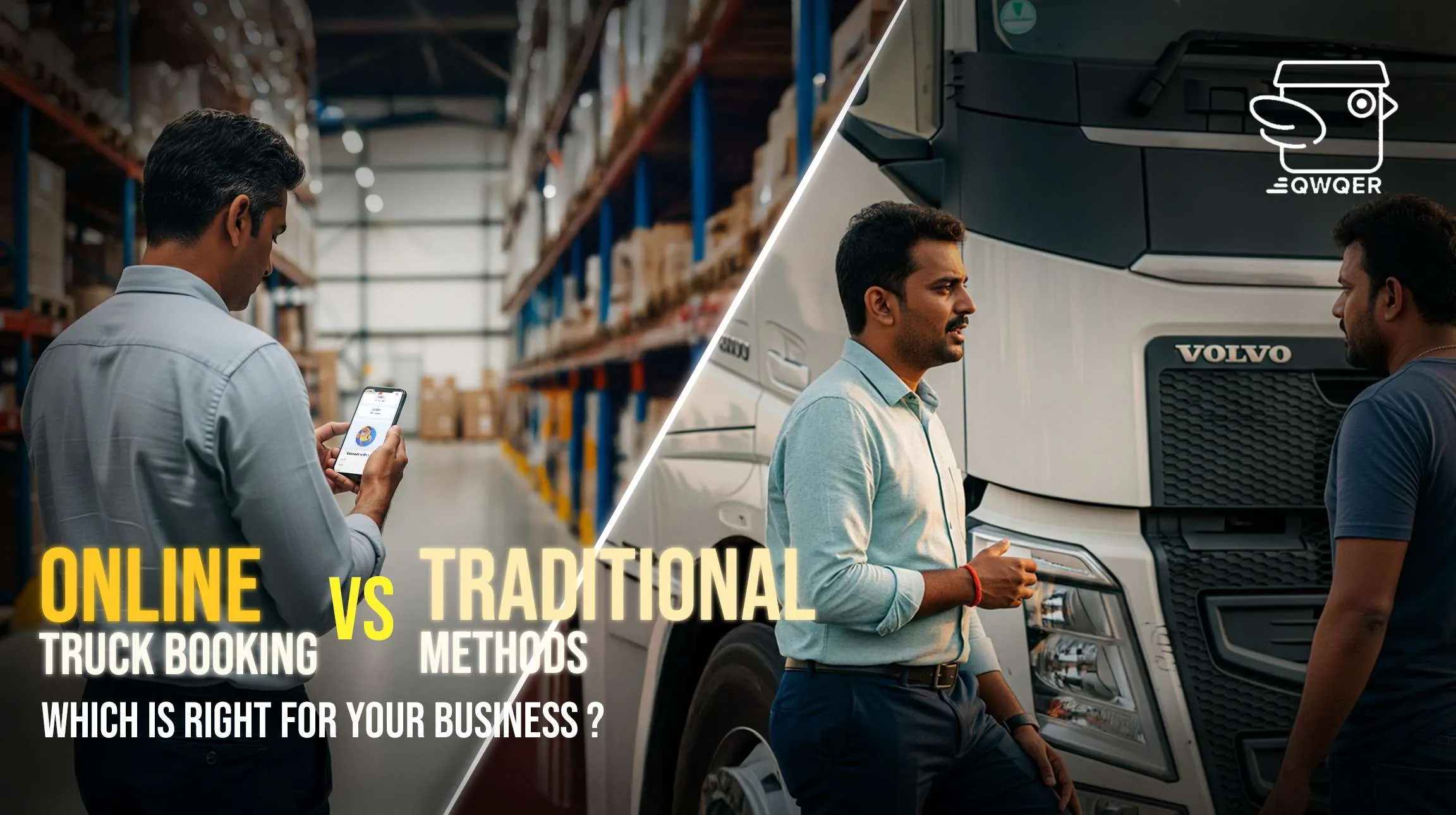
Methods—Which is Right for Your
Business?
India's fast-paced business environment presents unique logistics challenges
that continue to intensify as the economy grows. The country's logistics costs
are estimated at 14-15% of its GDP, markedly higher than the global average
of 8-10%, undermining its competitiveness in international trade. With India's
logistics industry valued and experiencing rapid expansion driven by
e-commerce growth and manufacturing base expansion, businesses are
increasingly seeking efficient, transparent, and cost-effective truck booking
solutions.
The traditional phone-based booking methods that have dominated the sector
for decades are now being challenged by innovative digital platforms that
promise greater efficiency and transparency. As businesses across India
grapple with the choice between familiar traditional approaches and modern
online solutions, one central question emerges: Should you choose online
truck booking platforms or stick with traditional phone-based methods?
Understanding the Two Approaches
Traditional Truck Booking Methods
Traditional truck booking has long relied on established networks of personal
relationships and manual processes. This approach typically involves booking
via phone calls to local agents or transport offices, where businesses depend
heavily on personal networks and extensive manual paperwork. The
conventional workflow begins with multiple phone calls to various transporters,
followed by price negotiations, manual documentation, and coordination
through intermediaries who often charge broker commissions ranging from
10-15% of the total shipment cost.
The traditional system operates on fixed business hours and agent availability,
with limited visibility into pricing structures and vehicle availability.
Documentation remains largely paper-based, creating challenges for
record-keeping and audit trails. While this method has served the industry for
decades, it often involves opaque pricing with hidden fees and last-minute
surcharges that can significantly impact transportation budgets.
Online Truck Booking Platforms
Digital transformation has introduced sophisticated online truck booking
platforms that revolutionize how businesses approach logistics. Leading
platforms like QWQER offer comprehensive web portals and mobile
applications that enable instant vehicle matching and booking. These
platforms provide digital documentation, real-time tracking capabilities, and
instant confirmations, fundamentally changing the booking experience.
The online process typically involves entering pickup and delivery locations,
selecting vehicle types based on cargo requirements, receiving instant fare
estimates, and confirming bookings within minutes. Advanced platforms
employ AI-powered route optimization to minimize travel time and fuel
consumption while providing transparent, itemized pricing with no hidden
charges. The digital approach offers 24/7 accessibility, allowing businesses to
book trucks anytime, anywhere, with automated route optimization and
real-time updates for faster turnarounds.
Efficiency: Speed, Accessibility, and Flexibility
Traditional Methods
Traditional truck booking methods are inherently time-consuming, often
requiring multiple phone calls, extensive negotiations, and manual paperwork
processing. The system operates within limited business hours and depends
entirely on agent availability, creating potential delays when urgent shipments
arise. Manual scheduling and coordination frequently result in operational
delays, as businesses must wait for agents to confirm vehicle availability and
finalize arrangements through phone conversations.
The traditional approach lacks flexibility in handling dynamic demand
fluctuations, as businesses cannot easily scale their booking capacity during
peak periods or urgent requirements. This limitation becomes particularly
challenging for small and medium enterprises that lack the resources and
technological know-how required to build efficient logistics networks.
Online Platforms
Digital platforms excel in providing instant booking capabilities, allowing
businesses to request and schedule trucks 24/7 through both mobile apps and
web portals. The streamlined process enables vehicle matching and
scheduling with just a few clicks, eliminating the waiting periods traditionally
associated with call-center bookings. This frictionless approach empowers
businesses to respond to dynamic demand fluctuations immediately.
Online platforms leverage AI-driven smart logistics to optimize operations
continuously. These systems employ route optimization algorithms that
analyze traffic patterns, vehicle loads, and delivery windows in real-time,
dynamically recalibrating routes to minimize delays and ensure time-bound
commitments are met. The result is significantly improved operational
efficiency, with processing times reduced by over 50% through automation
and elimination of manual tasks.
Transparency: Pricing, Tracking, and Documentation
Traditional Methods
Traditional booking methods are notorious for opaque pricing structures that
often include hidden fees, broker commissions, and unexpected surcharges.
Without market rate visibility, businesses face the risk of inflated prices,
particularly when dealing with multiple intermediaries who each add their
markup. The absence of standardized pricing makes it difficult for businesses
to budget accurately for transportation costs.
Real-time shipment tracking remains virtually non-existent in traditional
methods, with businesses relying on periodic driver updates that may be
unreliable or delayed. This lack of visibility creates anxiety for both businesses
and their customers, as there's no way to monitor shipment progress or
predict accurate delivery times. Paper-based record-keeping systems are
prone to loss and errors, making it challenging to maintain accurate
transportation histories or conduct audits.
Online Platforms
Digital platforms prioritize transparency through upfront, itemized pricing that
factors in distance, vehicle type, and prevailing fuel rates. All charges are
clearly displayed before booking confirmation, guaranteeing budget
adherence for startups, SMEs, and large enterprises alike. The competitive
marketplace dynamics inherent in online platforms ensure fair pricing through
transparent quotes from multiple service providers.
Live GPS tracking represents a fundamental advantage of online platforms,
providing real-time shipment visibility that enhances customer satisfaction by
offering instant delivery updates throughout the transportation process.
Research indicates that 91% of consumers actively track their packages, with
39% checking once daily, demonstrating the critical importance of real-time
visibility. Digital platforms maintain comprehensive electronic records that are
easily accessible for audits, reporting, and historical analysis, eliminating the
risks associated with paper-based documentation.
Cost Savings: Direct, Measurable Benefits
Traditional Methods
Traditional booking methods typically incur higher costs due to broker and
agent commissions that can range from 10-15% of the total shipment value.
These intermediary fees, combined with operational inefficiencies, significantly
increase overall transportation expenses. The lack of market rate visibility
often results in inflated pricing, particularly when businesses don't have direct
access to competitive quotes.
Underutilization of truck capacity and increased empty runs further drive up
costs in traditional systems. Without sophisticated load management systems,
traditional methods often result in suboptimal route planning and inefficient
vehicle utilization, leading to higher per-shipment costs and reduced
profitability.
Online Platforms
Digital platforms eliminate middleman fees by providing direct connections
between businesses and transporters, resulting in immediate cost savings.
The competitive marketplace structure ensures fair pricing through
transparent bidding processes where multiple service providers compete for
business. This competition naturally drives prices down while maintaining
service quality standards.
AI-powered load management and route optimization significantly reduce
operational costs by minimizing empty runs and optimizing delivery routes.
These intelligent systems can cut transportation spending by up to 15%
compared to traditional spot markets through optimized routing and bulk
contract arrangements. The automation of booking processes and elimination
of manual tasks further reduce labor costs and operational overhead.
Additional Advantages of Online Truck Booking
Scalability and User Experience
Online platforms excel in handling volume spikes and diverse vehicle needs
without requiring significant infrastructure investments. The digital architecture
allows businesses to scale their logistics operations seamlessly,
accommodating seasonal demand fluctuations or business growth without
operational disruptions. Modern platforms feature intuitive interfaces designed
for users of all technical skill levels, ensuring that businesses can leverage
advanced logistics capabilities without requiring specialized tech expertise.
Customer Support and Integration
Leading online platforms provide 24/7 live assistance and dedicated account
managers to ensure smooth operations. This round-the-clock support
significantly exceeds the limited business-hour availability of traditional
booking methods. Advanced platforms offer seamless API connections that
enable integration with existing business systems for bulk or recurring
bookings.
API integration provides numerous benefits including increased efficiency
through automation, enhanced operational productivity, cost reduction through
streamlined processes, and improved scalability to handle growing business
demands. Real-time data exchange capabilities enable better decision-making
and supply chain visibility, while automated order processing reduces manual
intervention and processing times by over 50%.
When Might Traditional Methods Still Make Sense?
Despite the clear advantages of digital platforms, certain scenarios may still
favor traditional booking methods. Niche or rural logistics scenarios where
digital penetration remains low may necessitate traditional approaches,
particularly in remote areas where internet connectivity or smartphone
adoption is limited. Long-standing relationships with local transporters for
highly specialized cargo requirements may continue to provide value,
especially when dealing with unique handling needs or regulatory
requirements.
Situations requiring extensive negotiation or bespoke transportation
arrangements may benefit from the personal touch that traditional methods
provide. Complex logistics operations involving multiple stakeholders or
customized service agreements might still require the relationship-based
approach that characterizes traditional booking methods.
Wider Vehicle Options with Online Truck Booking
One significant advantage of digital platforms is the comprehensive range of
vehicle types available to match specific load requirements. From small
parcels to bulk cargo transportation, businesses can select the exact size and
capacity needed, minimizing costs while maximizing operational efficiency.
Popular Vehicle Types Available Online:
- Load Auto: Ideal for intra-city, light cargo movement, offering affordable
and fast delivery solutions for small businesses and e-commerce
operations.
- Chota Hathi / Tata Ace: These compact and maneuverable vehicles
are perfect for last-mile delivery and urban distribution. The Tata Ace
Gold, for example, offers payload capacities ranging from 600kg to
900kg with multiple fuel options including petrol, diesel, CNG, and
electric variants.
- 8ft, 9ft, 10ft, 14ft, and 17ft Trucks: These flexible options cater to
various cargo volumes and are extensively used for e-commerce,
FMCG, and industrial goods transportation. The diverse size range
ensures optimal vehicle selection based on specific shipment
requirements.
- Tempo: Suitable for medium-weight loads, tempo vehicles are
frequently utilized for small business logistics and regional distribution
networks.
- Tata 407: This mid-capacity vehicle is widely used in retail, supply
chain, and regional delivery operations, offering reliable performance for
medium-scale logistics requirements.
The availability of such diverse vehicle options through online platforms
enables businesses to optimize their transportation costs by selecting
precisely the right vehicle size for each shipment, avoiding the inefficiencies of
oversized vehicle bookings that characterize traditional methods.
Conclusion: Making the Right Choice for Your
Business
The comparison between online truck booking platforms and traditional
methods reveals clear advantages favoring digital solutions across multiple
critical dimensions. Online platforms demonstrate superior efficiency through
24/7 accessibility, instant booking capabilities, and AI-powered optimization
that reduces processing times by over 50%. The transparency offered by
digital platforms, including upfront pricing, real-time tracking, and
comprehensive digital documentation, addresses the fundamental
weaknesses of traditional methods. Cost savings represent perhaps the most
compelling argument for online adoption, with businesses achieving up to
15% reduction in transportation expenses through direct transporter
connections, elimination of broker fees, and optimized route planning. The
scalability and integration capabilities of modern platforms position businesses
for sustainable growth while maintaining operational flexibility.
As India's logistics sector continues its digital transformation journey,
businesses that embrace online truck booking platforms like QWQER will be
better positioned to compete in an increasingly dynamic marketplace. The
evidence overwhelmingly supports the transition to digital logistics solutions
for businesses seeking scalable, reliable, and transparent truck booking
services that can adapt to evolving market demands and customer
expectations.